Customs and festivals
Festivals, memories and traditions that keep the identity of Kasos alive.
The Kassio community, on the island and in the diaspora, maintains vibrant traditions that connect generations. Religious festivals, fairs and family customs give rhythm to life on the island and are an occasion for meeting and collective memory.
Anniversary of the Kasos Holocaust
Every year, on June 7, Kasos commemorates the Holocaust of 1824, when Egyptian troops destroyed the island in retaliation for its participation in the Greek Revolution. The anniversary is celebrated with official eulogies, wreath-laying at the Kasos Monument, and commemorative events, in which both the island's residents and members of the diaspora participate.
Festivals of the year
The six settlements of Kasos celebrate the patron saint of each parish or chapel with festivals that combine church attendance, community offering (fundraising), traditional food — Kassian stuffed dumplings, red pilaf with cinnamon, fried potatoes — and a feast with lyre, lute and local dances (sousta, zervos) until dawn. Preparation often begins two weeks in advance, with the cleaning and whitewashing of the church and cooking in large cauldrons by groups of volunteers. The calendar of the island's main festivals:
- July 17Agia Marina
- August 6Christ the Savior
- August 15Assumption
- August 27Agios Fanourios
- September 1Agios Mamas
- September 8Our Lady of Helleros
- September 14Exaltation of the Holy Cross
- October 26Agios Dimitrios
- November 3Saint George the Drunkard
- December 12Saint Spyridon
- February 2Answer
- April 23Agios Georgios (Chadies)
- May 21Saints Constantine and Helen
- Pentecost SundayHoly Trinity (movable feast)
The feast of the Assumption of the Virgin Mary, on August 15, is the largest and most popular on the island, attracting over 2,000 visitors each year. Movable feasts (such as the Holy Trinity) are not currently included in the Association's calendar of events, as their date changes each year depending on Easter.
More customs and traditions
Open a section to read more.
Easter and Holy Week
Easter in Kasos follows the Orthodox tradition, enriched with local customs. On Lazarus Saturday, children dress a peer in white and decorate him with flower wreaths ("zolies"), going from house to house singing the song of Lazarus. On Holy Thursday, girls gather wildflowers and daisies to decorate the Epitaph.
At noon on Holy Saturday, farmers slaughter their animals to prepare the «oftos» lamb in the traditional oven and the «busties» (stuffed entrails), while housewives knead the traditional «tortes» with mizithra cheese in the neighborhood’s communal wood-fired ovens. Before Easter, young people roam the alleys ringing bells to wake up the village, and on the evening of Easter Monday, an effigy of Judas is symbolically burned in the square. On the morning of Good Friday, families visit the cemeteries for a memorial service and a funeral.
Carnival and spring customs
During the Carnival period, the «mouskaria» appear in Kasos: disguised figures, usually older men, wearing old clothes and masks made of cardboard or animal skin, who roam the island without revealing their identity, leaving the residents to guess who is hiding behind them. The table during the period is dominated by mizithropites —fried pies with mizithra cheese and honey— and xylokopites.
In spring, the custom of «cows» is revived in some neighborhoods: single girls decorate a swing with flowers under an olive tree, around which the young men of the village gather — an old occasion for acquaintance and courtship. The custom of «Klidona» is also preserved: single women silently collect water from a well, and interpret the first name they hear the next day as a sign of their future husband.
Wedding customs
The traditional Kassio wedding lasts two days and mobilizes the entire village. The bride's family prepares the "kaniskia" — trays with hundreds of traditional sweets, such as kourabiedes and moschopougia — while the groom's family prepares the "dresses" with the bride's wedding dress and personal belongings. On the afternoon of the wedding, musicians visit the groom's house singing improvised mantinades, and after the ceremony, relatives hang gold on the bride.
The bride's family traditionally pays for the feast, while the groom's family pays for the church ceremony. The next morning, a smaller, more family-oriented meal follows. The custom retains strong matriarchal elements: traditionally, the man settled in his wife's house, a result of the island's maritime tradition, where men were often away at sea for months.
Traditional costume and dances
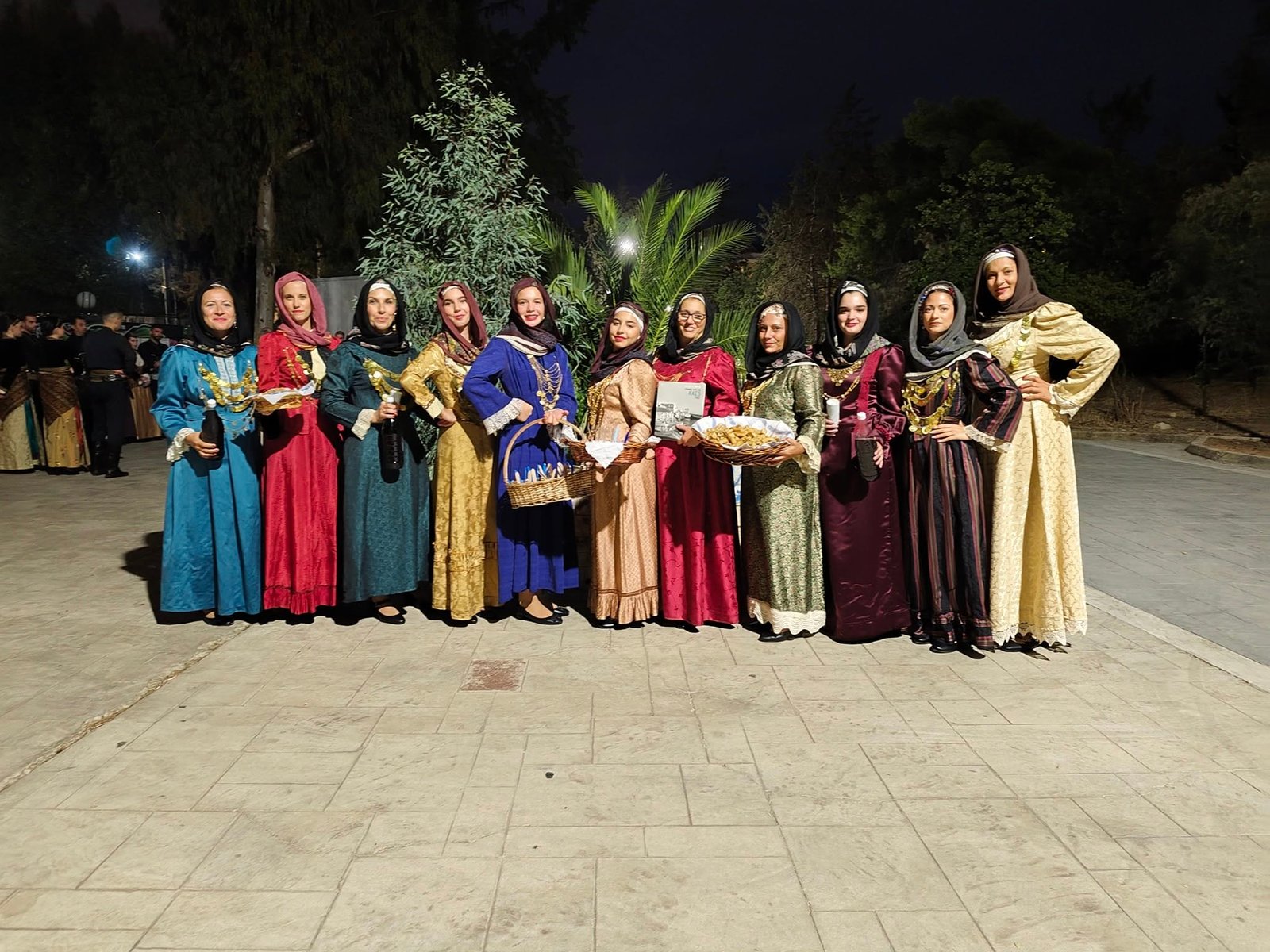
During celebrations and events, members of the Association and residents of the island wear traditional Kassioti costume, keeping alive a valuable aspect of the local cultural heritage. At the same time, traditional dances and Kassioti songs accompany the festivals and celebrations, transmitting the island's musical tradition from generation to generation.
Summer and the return of the diaspora
During the summer months, Kasos comes alive as hundreds of Kassians from the diaspora return to the island for holidays and to participate in local celebrations. This period is the peak of the island's social and cultural life, with numerous events, festivals and family gatherings.
Sources
The festival calendar, the customs of the cycle of time and marriage on this page are based on the following sources:
- Official Tourism of Kasos — festival calendar: Kasos Tourism (Municipality of Karpathos-Kasos)
- Official Tourism of Kasos — parishes and churches: Churches of Kasos
- Istorima.org oral history archive: “Customs and traditions of Kasos, then and now”
- Istorima.org oral history archive: “Pelagia Kampouri: customs through the cycle of the year in Arvanitochori”