

Kasos
Local cuisine
Flavors and recipes that accompany the festivals and celebrations of Kasos.
Red pilaf with the aroma of cinnamon, dolmadia so small they almost look miniature, and a creamy cheese unknown outside the island — the cuisine of Kasos is unlike any other in the Aegean. Behind each dish lies a story of isolation, self-sufficiency, and celebration, starting from the island's pastures and ending at the table of every festival.
A kitchen born from isolation
The cuisine of Kasos is not just a collection of recipes; it is, to a large extent, an imprint of the island’s geography and history. Kasos, isolated at the southernmost tip of the Dodecanese and with little arable land, relied for centuries on livestock farming—it was no coincidence that the Ottomans called it «Çoban Adası,» meaning «Shepherd’s Island»—and on whatever could be produced locally: milk, cheese, honey, a little wheat, wild herbs, and fish. This forced self-sufficiency gave birth to a cuisine with few but intense, well-crafted ingredients, very different from the «richer» cuisines of other islands with more land.
The result is a gastronomy full of flavors that are hard to find anywhere else in Greece, and that is traditionally enjoyed both at village festivals and in the island’s modern-day tavernas. For anyone visiting Kasos, tasting these dishes is not just a gastronomic experience — it is a way to better understand the place itself.
The two signature dishes
If there are two dishes that one must definitely try, they are the Kassio pilaf and the macarounes with sitaka. The pilaf is red, cooked in the broth of boiled lamb or goat with tomatoes, and served sprinkled with cinnamon — it is the dish that one will encounter at every festival and every important social event on the island, almost synonymous with the celebration. The macarounes with sitaka, on the other hand, are the absolute trademark of Kassio gastronomy: pasta —usually penne— served with «sitaka,» a local creamy cheese made from thick sheep’s or goat’s milk, and caramelized onions. Sitaka is not produced anywhere else in the same way, and its taste is considered by the locals to be unmistakably Kassio.
Equally iconic are the «dourmaes» — the traditional dolmadias of Kasos, stuffed with minced meat, rice, onion, tomato, butter and spices. What sets them apart from ordinary dolmadias is their impressively small size — a detail that requires patience and craftsmanship in their preparation, and which has made them famous beyond the borders of the island.
The dishes of festivals
The cuisine of Kassio is closely linked to the island's festivals and religious celebrations. Traditional dishes are still prepared today from generation to generation, often in large communal portions shared at festivals, such as the Feast of the Holy Cross.
-
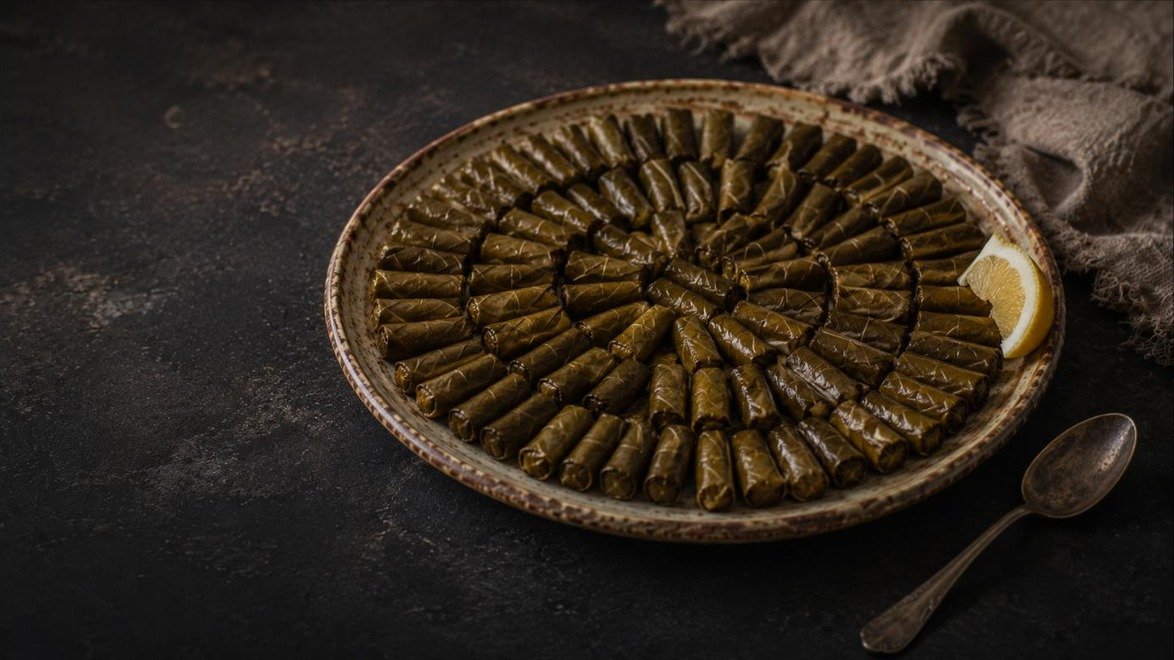
Kasian dolmadakia
The famous small dolmadaki of Kasos, wrapped in grape leaves.
-
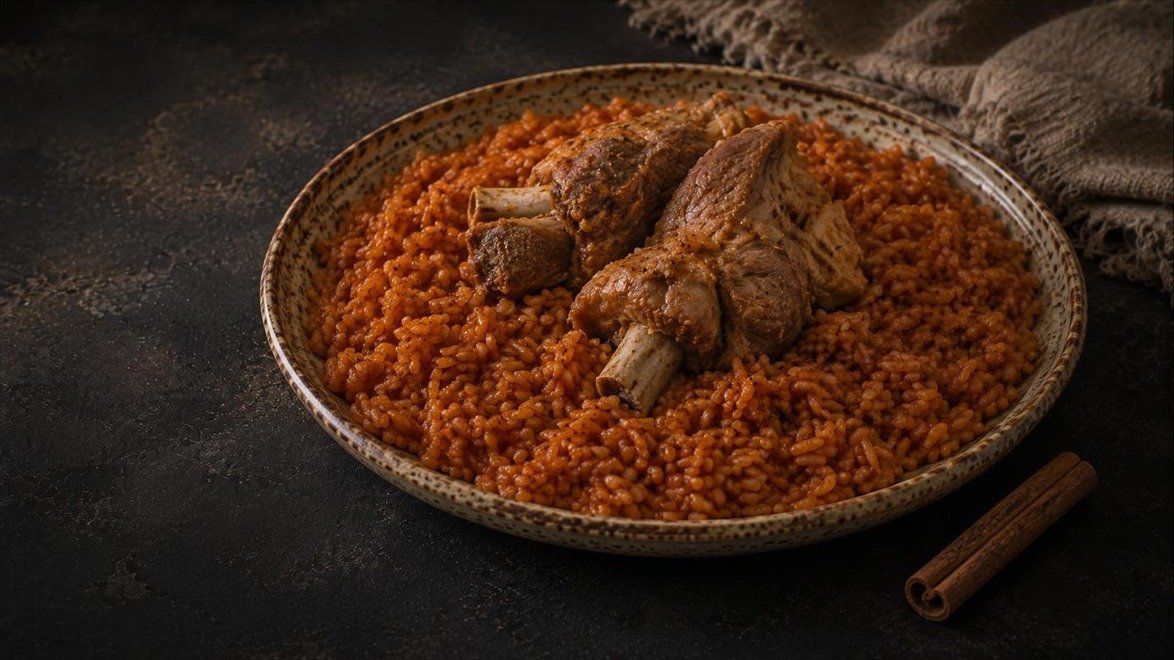
Kasian pilaf
Red pilaf cooked in the broth of boiled lamb or goat and sprinkled with cinnamon — the dish of every festival.
-
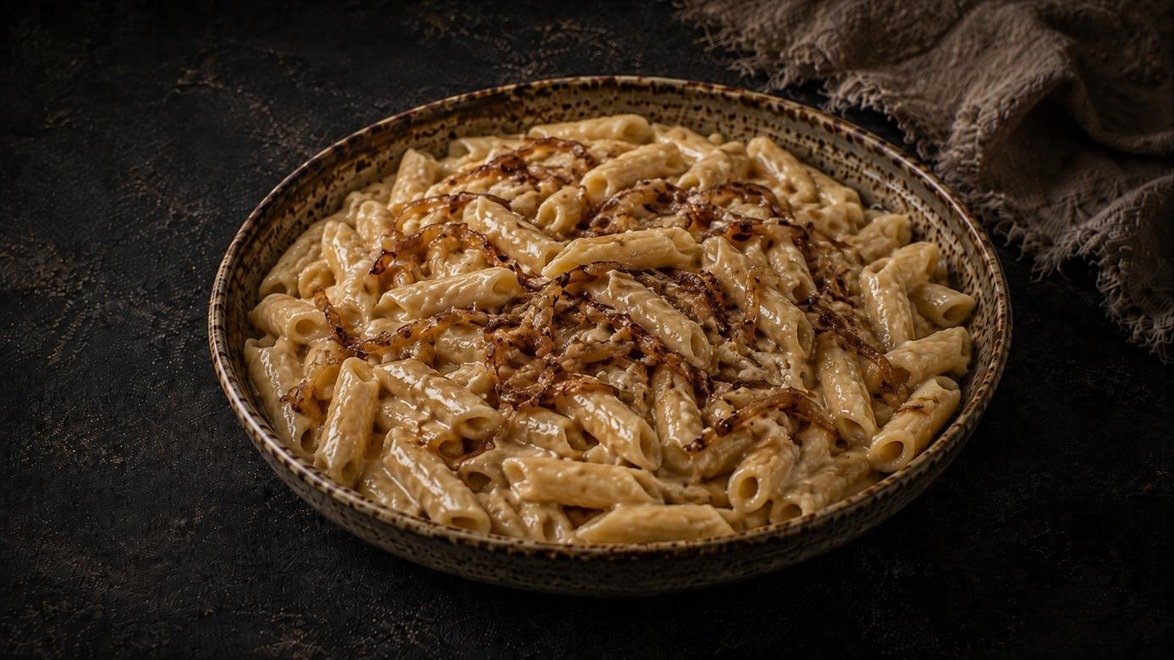
Makarounes with sitaka
The trademark of Kasian cuisine: pasta with wheat, the local creamy cheese, and caramelized onions.
-
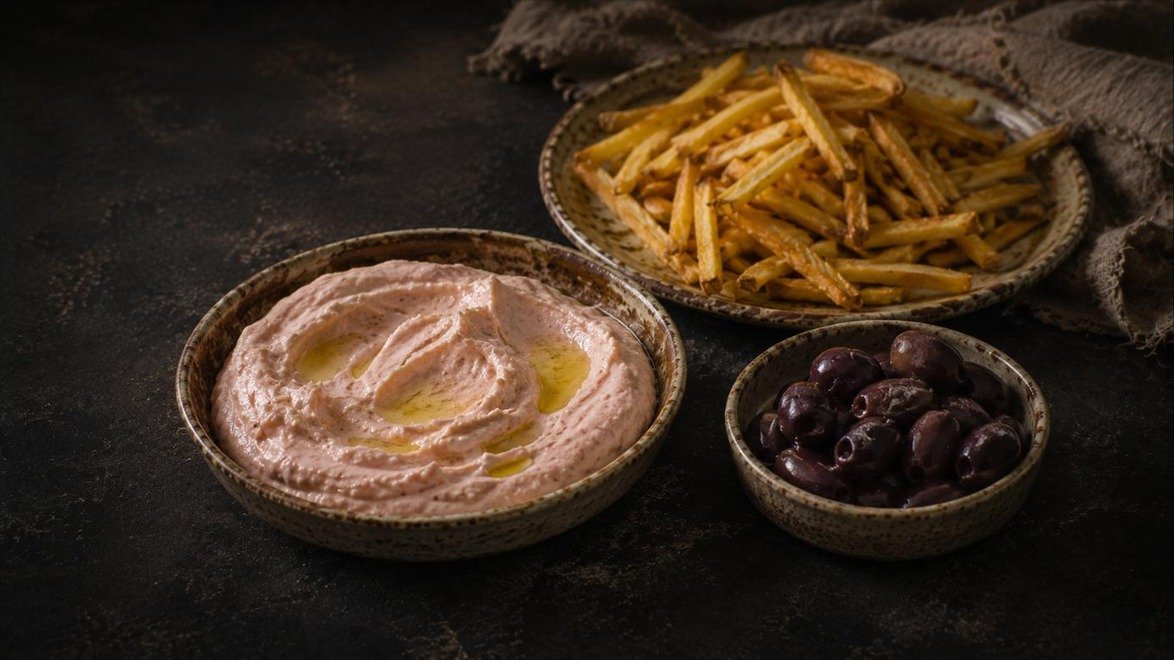
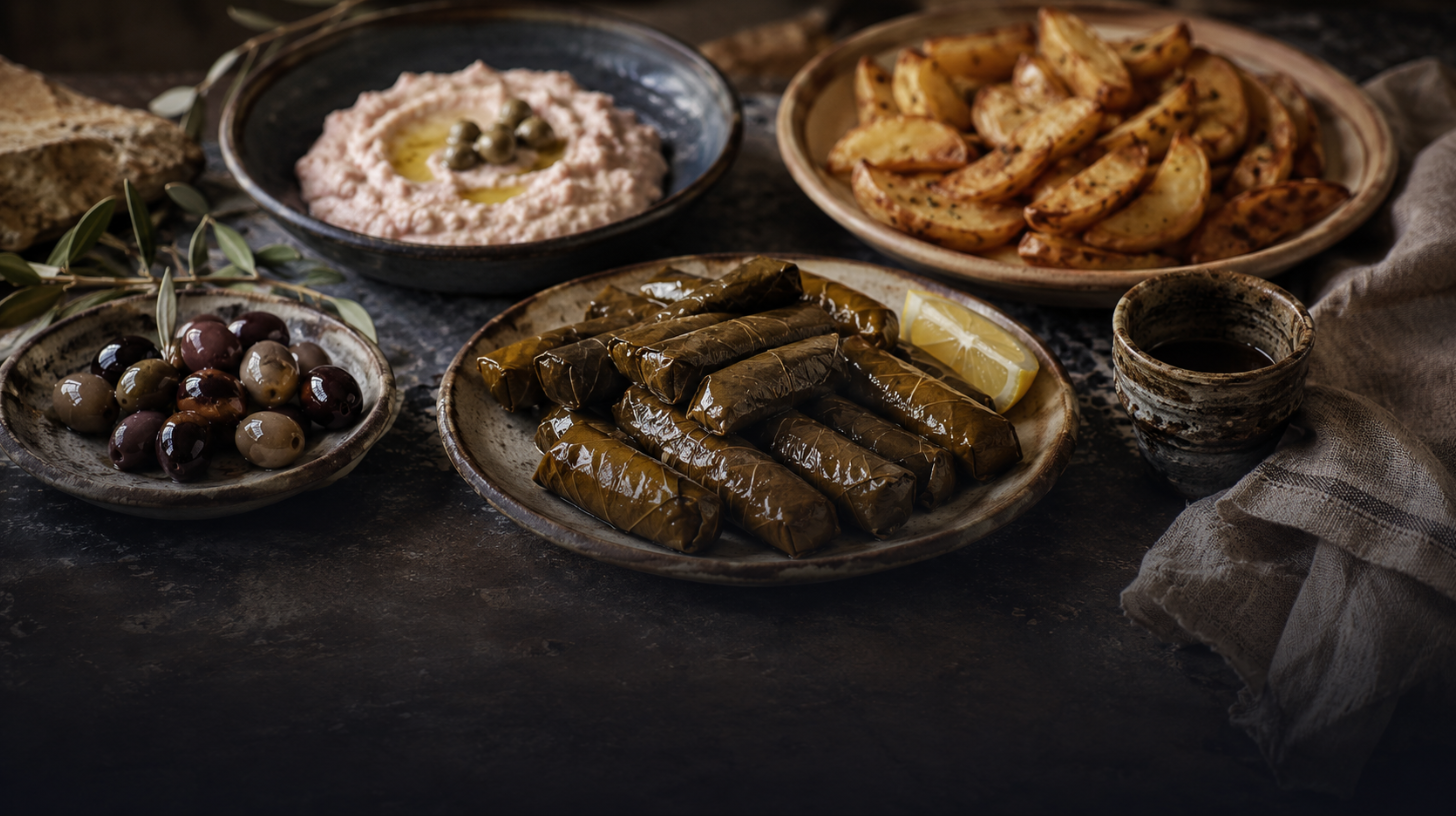
Taramosalata, olives and fried potatoes
The classic side dishes that complement the festive table at almost all festivals on the island.
-
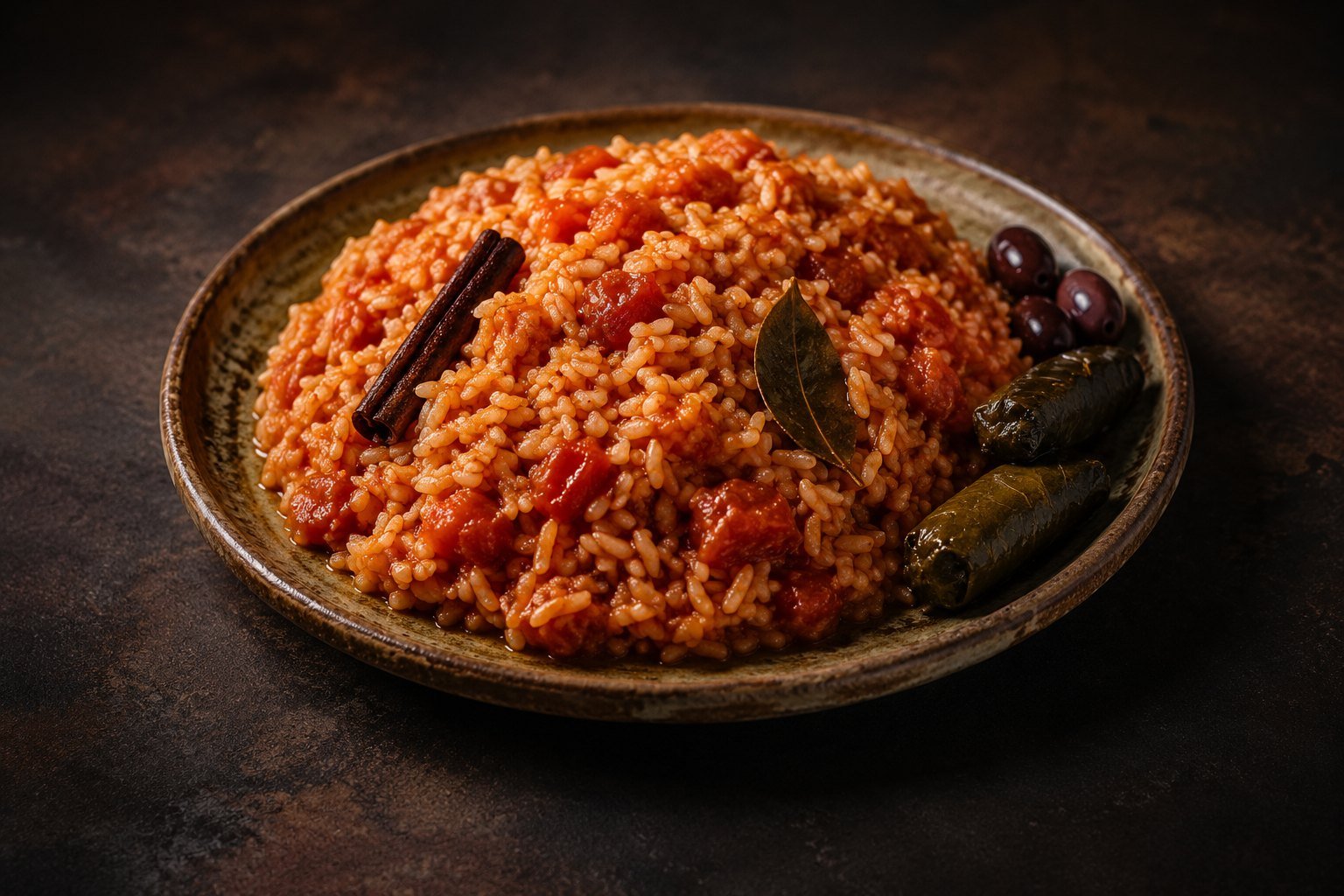
Tsaitia
A fasting substitute for traditional meat pilaf, which requires 4–5 hours of preparation.
Beyond the classics: dishes for the more adventurous
For those who want to explore Kassio’s cuisine more deeply, there are dishes that are rarer even for Greeks themselves. Black cuttlefish pilaf is made with cuttlefish ink, giving the rice a deep black color and a strong sea flavor. Roikio yahni is cooked with roikio, a wild weed also known as stamnagathi, usually cooked with tomato — a recipe that recalls how important weeds were in the diet of an island with little arable land. Heavier, festive dishes are bustia — lamb belly stuffed with rice and liver — and ofto arni, stuffed lamb baked whole in the oven, both dishes traditionally associated with great celebrations and festivals. From the sea, look for meunole pastes — small fish pickled using the old method of preservation, before the era of refrigeration.
Among the baked goods, the Kassiotike kouloures with sesame and the pittia, small spinach pies, stand out. For desserts, try the myzithra cakes, the myzithropites, and especially the moschopougia — traditional sweets filled with almonds, usually prepared for special occasions.
Products worth taking with you
In addition to cooked dishes, Kasos also has a number of special local products. «Olaiki» is a dry cheese with a strong flavor, ideal to accompany a glass of wine. The island’s honey is considered to be of excellent quality, thanks to the Mediterranean, aromatic flora of Kasos. The rarest product, however, is Kassian butter — famous, according to local tradition, since ancient times, but today rare and hard to find, as its preparation requires large quantities of milk in relation to the yield. If you have the opportunity to try it, consider it a rare experience.
Sources
Travel.gr — The unique traditional Lenten festival of the Cross in Kasos (opens in new tab)travel.gr
Kasos TravelFind — Festivals of Kasos (opens in new tab)kasos.travelfind.gr
Gastrotourismos.gr — The Cuisine of Kasos: Recipes, Gastronomy, Products (opens in new tab)gastrotourismos.gr
Municipality of the Heroic Island of Kasos — Local Flavors (opens in new tab)tourism.kasos-heroicisland.gr